
BUILD THE TAKE CASTING REMEMBERS
30-SECONDS. MAKE IT COUNT.
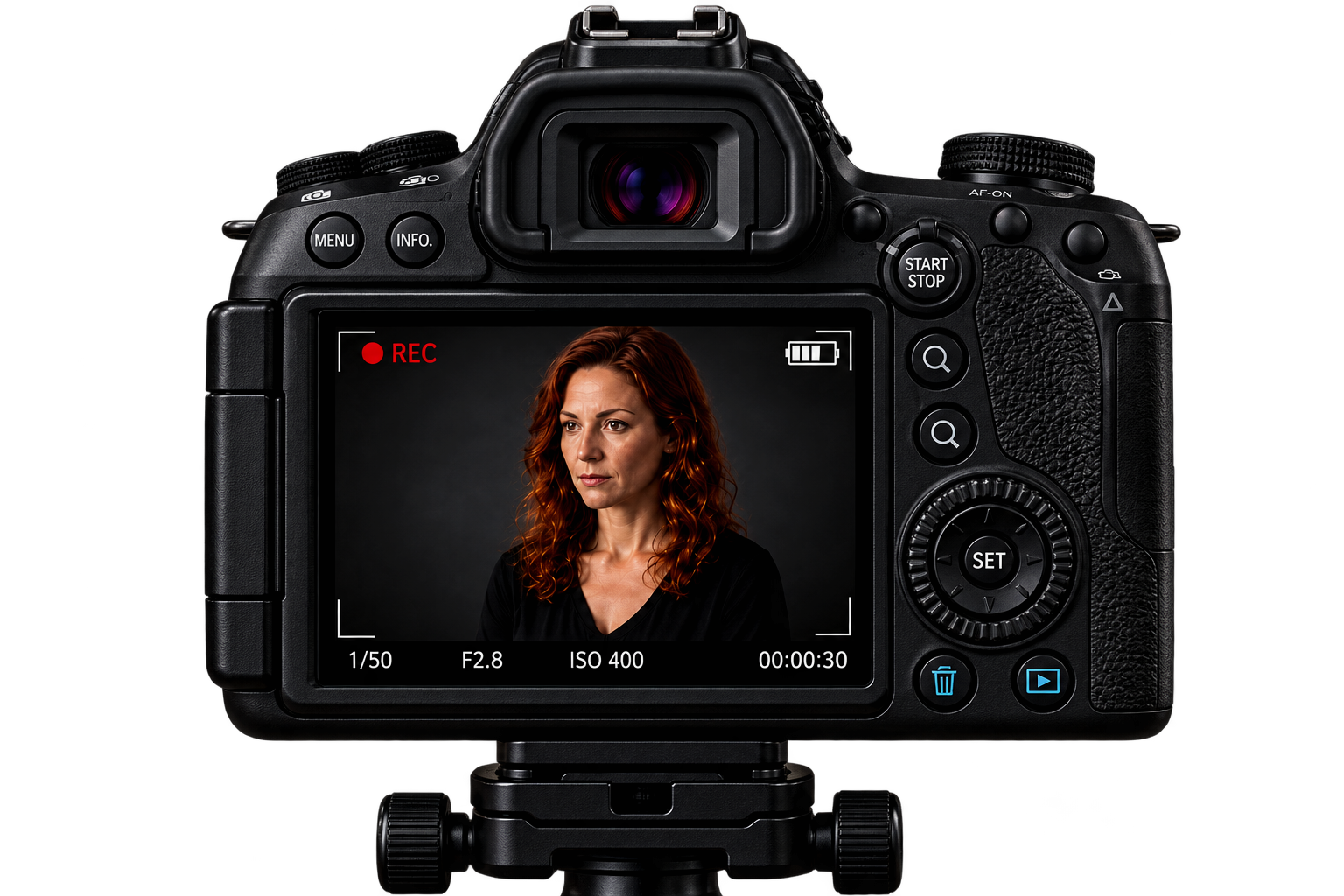
Build the take. Capture the shift. Give casting a reason to keep watching.

30-SECONDS REMEMBERED
A 30-second demo clip is more than a shortened scene. It is a concentrated opportunity to show casting who you are on camera, how you think inside a scene, and what happens when the circumstances begin to affect you. The goal is not to fit an entire performance into thirty seconds. It is to choose thirty seconds that reveal something casting wants to see more of.
When Casting Presses Play
Casting may be reviewing dozens—or hundreds—of submissions while searching for an immediate sense of type, presence, emotional truth, and whether an actor belongs in the world of the project. A strong demo clip respects that limited viewing time. It begins close to the dramatic event and gives casting something meaningful to watch almost immediately.
Think of the clip as a performance sample rather than a shortened scene. Casting should be able to recognize a clear objective, a specific relationship with the unseen scene partner, truthful listening, and at least one meaningful change in thought, tactic, or emotional understanding. Strong opening and ending lines help frame the excerpt, but what happens between those lines is what reveals the actor.
Whenever possible, prepare two distinct takes of the same excerpt. Keep the dialogue consistent while changing the intention, stakes, rhythm, emotional temperature, or relationship. Take Two should not simply be louder or more emotional. It should reveal another truthful interpretation and demonstrate that the actor can make choices, respond to direction, and find more than one way through the material.
Putting the Clip to Work
A strong 30-second clip becomes even more useful when it can live on an actor’s Actors Access or other casting profile and be selected strategically for submissions. Individual clips allow actors to present material that supports the particular role being considered rather than asking casting to search through a longer reel to find the relevant performance.
Choose footage that complements the submission. A grounded dramatic clip may support one role, while something warmer, more authoritative, vulnerable, comedic, or conversational may better serve another. Over time, actors can develop a small library of concise performances representing different parts of their casting profile.
Two contrasting takes can provide additional flexibility. One might be restrained and psychologically internal while another explores greater urgency, confidence, vulnerability, or behavioral energy. The same material can therefore demonstrate range without requiring an entirely different scene—while giving the actor additional footage to choose from when deciding what best represents the role.
Film the Performance—Not the Self-Tape Setup
Frame the shot so casting can clearly read the actor’s eyes, thoughts, and subtle changes in behavior. A medium close-up or appropriately composed chest-up frame usually provides enough physical freedom without sacrificing access to the face. Keep the eyeline close enough to camera that the relationship feels immediate without looking directly into the lens unless the material specifically calls for it.
Avoid unnecessary side-to-side movement, swaying, pacing, or drifting through the frame. Actors sometimes move simply because the script indicates a beat or because they feel a new section of dialogue beginning. Likewise, avoid moving so far backward that casting loses access to the eyes and subtle facial behavior. Movement should come from the circumstances—not from an obligation to make the performance look active.
Let the Camera See the Idea Shift
An Idea Shift does not automatically require a new body position. Instead of stepping to another mark whenever the thought changes, change the tactic and allow the camera to witness the discovery. One transition might happen through a simple progression:
Head → Eyes → Face Forward
The head responds first. The eyes then find or reconsider the scene partner. Only afterward does the face or upper body subtly move forward. It creates progression without announcing, “This is the next beat.”
This is especially useful during beat changes. Let the previous tactic stop working. Allow the character to process what has just happened. Then discover another way to affect the person across from them. The eyes may register that discovery before anything else moves. A breath may change. Focus may sharpen. The face may become completely still.
Show the Camera the Thinking…Not the Beat
The camera can also become part of the storytelling. If the script and circumstances justify it, the actor may lean subtly closer during an intimate moment with the scene partner. That small movement forward can decrease the perceived distance between two people and make a confession, realization, challenge, or vulnerable admission feel more personal. The movement works because the character needs to get closer—not because the actor has decided the scene needs movement.
A successful 30-second demo clip ultimately comes down to specificity, simplicity, and truth. Know who is on the other side of the eyeline. Know what the character needs from them. Know where the thinking changes. Then trust the camera to capture what happens.
Thirty seconds does not have to show casting everything. It has to give them a reason to want the next thirty.